AMD’s next generation of Zen 6 processors is already starting to roll out, well – that is if you’re a HPC/Data center customer. But, Laptop and Desktop folks will need to wait, with the rumored next-generation Ryzen processors debuting at CES 2027 (though obviously, AMD haven’t confirmed this).
This next-generation of processors will be particularly interesting, because Olympic Ridge, which will be the successor to Granite Ridge, is rumored (although, very very likely) to be a 24 Core, 48 Thread part.
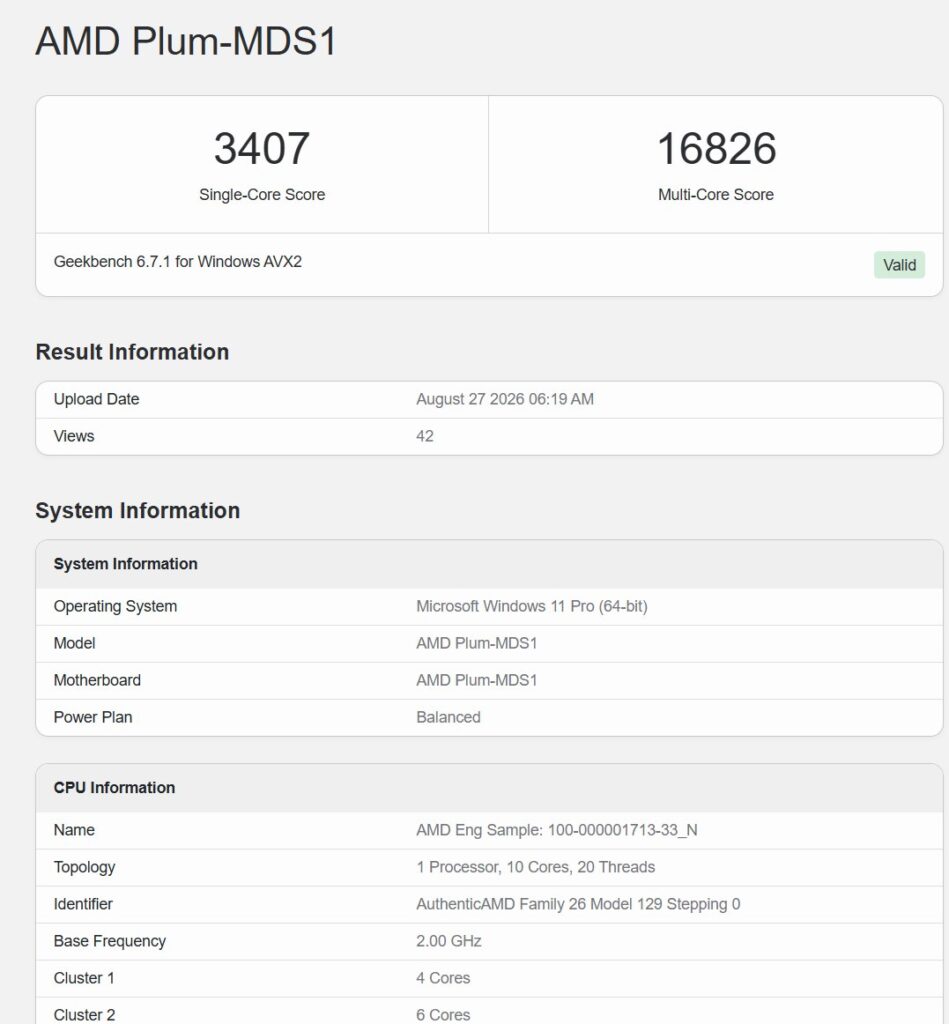
And finally, we’re seeing a few benchmarks pop-up, highlighting what we can expect. An engineering sample of Medusa Point has emerged on GeekBench, and while this isn’t the first time we saw AMD’s Zen 6-based Medusa rear its head on GeekBench, these results are definitely more impressive than the first time.
These results come in at 3408 for Single Core, and 16826 for Multi Core, for what is being detected as a ten thread part. For point of comparison, the previous time we saw Medusa Point benchmarks leak (again, around a month ago) the results were 3174 single core and 15092 Multi Core. In both instances, these are engineering sample results.
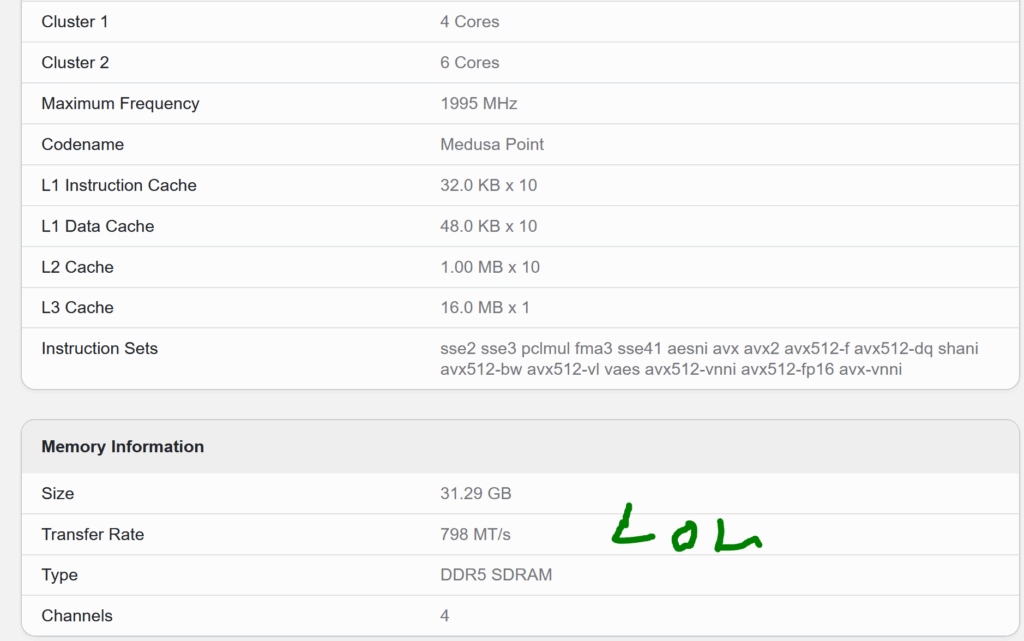
We’ll talk more about clocks etc in a moment (as they’re definitely not being identified correctly), however as further comparison, a Ryzen AI 395 Max scores about 2700-2800 points in single thread performance. So, what does that mean – well, in short that AMD’s
The Ryzen AI 365 (also a ten core part) scores about 2500 points in Single Thread, and around 12400 in Multi Thread using the same benchmarks (thanks to WCCFTech). I’ve included a nice benchmark comparison for the older Ryzen Medusa Result here, where you can see the 3 chips being tested against one another.
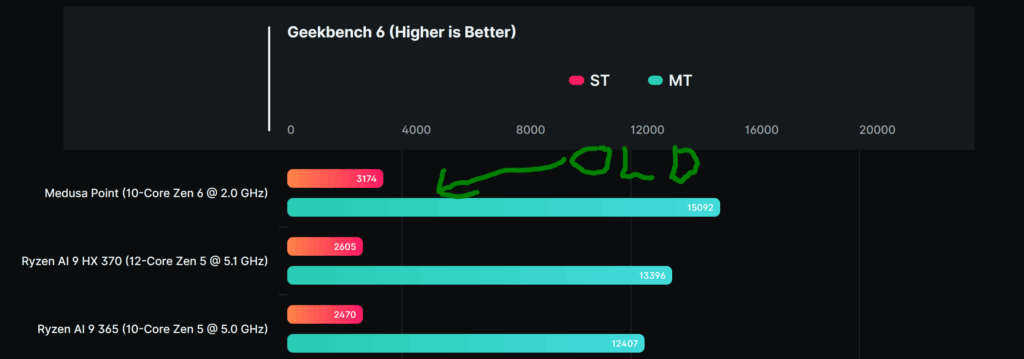
Unfortunately, we don’t know the clock speed of the older sample, but it was clearly not running at just 2Ghz (also, you might notice some ‘curious’ things about the memory speeds too, if you’re eagle eyed).
Interestingly, I tried using the .gb6 trick on this entry, and not really any hints. DevilFish on twitter (or should I say X) claims that the sample is locked at 5.4GHz, which if true (and again, remember these are engineering samples, so definitely likely more room in the tank) probably indicates that the final chip has a few hundred mhz more in it.
It’s difficult to guess clocks speeds at this point for Ryzen’s Olympic Ridge (which will be AM5), we know that CPUs for the Zen 5 lineup (such as the 9950X3D) has an advertised max boost of 5.7Ghz. Roughly speaking, about 500-600Mhz faster than the two AI 3xx chips you see above.
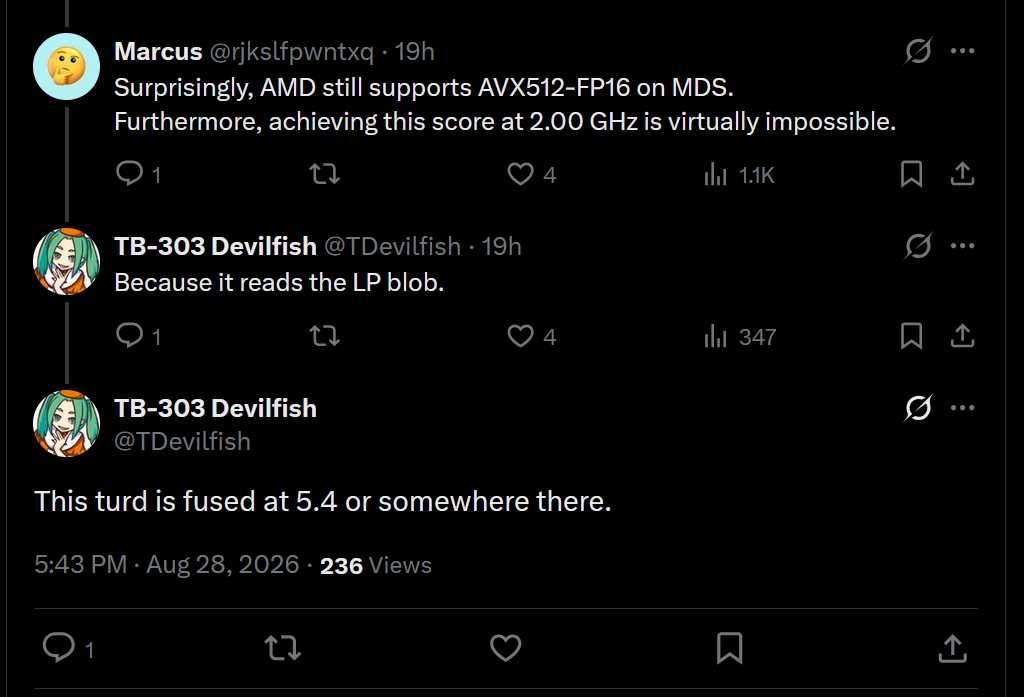
One could, in theory do speculation like saying well, if DevilFish info of 5.4GHz is correct, we can imagine desktop chips will have a similar headroom and guess low 6Ghz for the desktop parts. But really, all of this is speculation – because again, if 5.4GHz is correct, we don’t know how much headroom there is.
Regardless, what is clear is that generation over generation, Zen 6 will absolutely decimate the previous generation. GeekBench does benefit from some instructions more than games will, so percent of gains in a game (eg, CS2 or whatever) won’t necessarily directly translate. Rumors indicate that 8-12 percent IPC remains likely. I’ve personally heard that Vanilla Desktop parts will roughly perform (in games) about the same as X3D Zen 5 parts, perhaps a little better, depending on the game.
This is to say nothing of the desktop variants of Zen 6 again, featuring more cores, better intra CCD latencies and just, well, overall a much better architecture.
Thanks to HXL for finding these results over at GeekBench