Finally the Intel Arrow Lake refresh has broken cover, with the first ‘benchmark’ of an Intel Ultra 7 365K appearing online, and as the name would imply this chip follows in the footstep of Intels Ultra 7 265K, which is arguably one of the best chips in the Arrow Lake lineup when comparing price to performance.
Unfortunately, the rumors surrounding the refresh appear to be true – there’s no big increase in specifications for the Ultra 7 365K over its predecessor, with core counts remaining the same between the two generations. This is a little different to how Intel handled the 14th gen Raptor Lake refresh, where a few skus did see subtle bumps in core counts in the mid range.
So then, the Intel Ultra 7 365K still sports 8P cores and 12 E cores and the same 30MB of L3 cache returns. Interestingly, the base frequency is reported as 3.9Ghz (again a match to the Core Ultra 7 265K), and the P cores nudge to 5.4GHz.
This is actually a little lower than you’d expect (the Intel 265K actually runs faster), so most likely we’re not seeing this processor hitting its final clock frequency. The primary rumors surrounding the refresh were subtle increases in clock frequencies and enhancing the performance of the chips NPU.
Here we can see a comparison which harukaze5719 spotted on twitter.
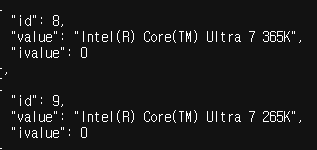
The results were spotted by Benchleaks (full credit to them) and were for Geekbench 6; as you can see – there’s nothing too surprising about the results here.
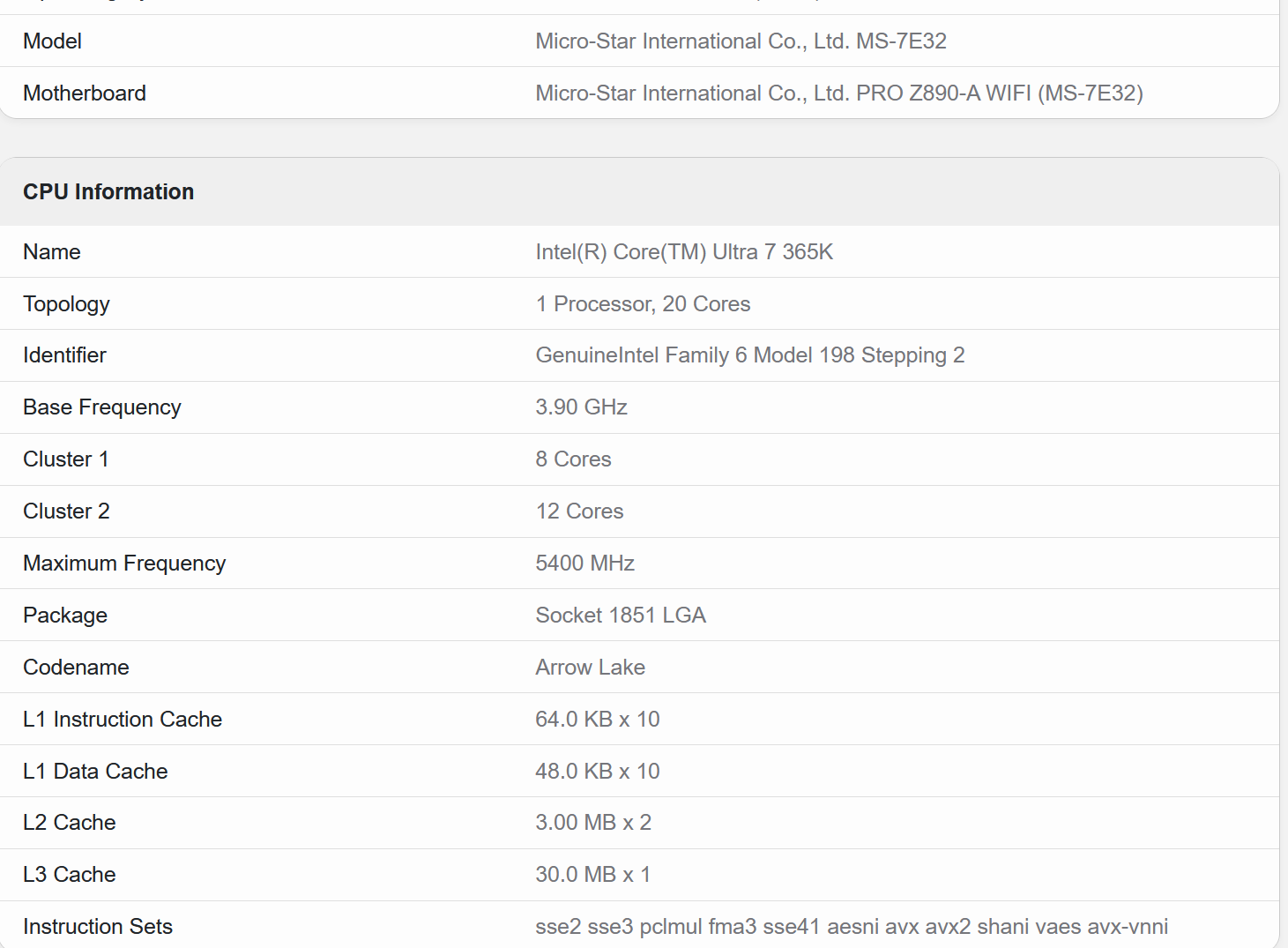
It’s also worthy of note that the actually achieved frequencies were under the max; another hint that we’re seeing not so retail ready silicon (though of course, there could be other things going on here, including the motherboard BIOS / software causing all sorts of weirdness).
Single: 2140 Multi: 19744 was the scores the CPU managed to pick up in the benchmark, nothing too out of the ordinary given the chip is certainly not behaving quite as it should. Generally speaking the Intel Ultra 7 265K hits about 21k-22k in geekbench 6 for multi-threading, but again given the clocks aren’t quite there yet, that explains the scores being a little lower.
Really, all eyes are on Intel’s next-generation of processors (Nova Lake) for the big increase in performance, with the company aiming to ramp up core counts, improving IPC and making other big overhauls (not least of which embracing bLLC, aka Intel’s version of AMD’s X3D technology).
It will be very intriguing to watch the next-generation showdown, as the company will be facing of course against Zen 6; which nudges core counts thanks to the CCDs sporting 12 cores instead of just 8 that we’ve seen for the previous several generations of Ryzen.
Source Benchleaks on Twitter