Well, CES 2026 has officially started, and in this article, I wanted to break down some of the biggest Nvidia announcements you will be interested in. Of course, Nvidia was keen to show off a ton of AI-related technologies (including more on DGX Spark and various tweaks and enhancements for AI models that run locally), but what about PC gamers?

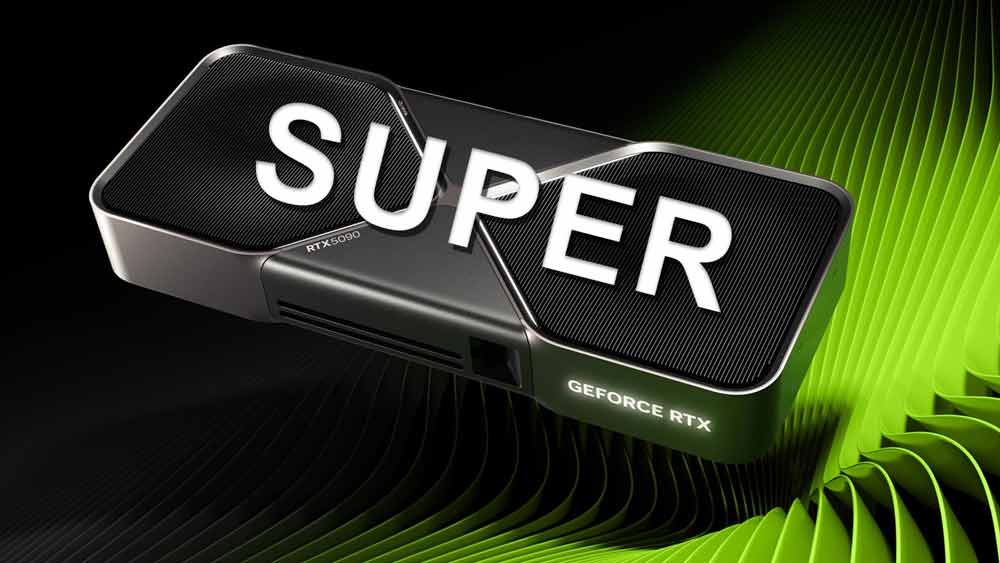
To tackle the big elephant in the room – no, RTX 50 Super cards weren’t announced. This isn’t surprising, there’d been very few rumors leading up to CES Nvidia was prepping to launch a new series of cards (no leaked benchmarks, no box images, no PCBs…). But, that isn’t to say there weren’t a few very interesting announcements – and perhaps best of all, many of these are free upgrades to your RTX 50 (and even older series cards) because they’re free in the form of a new iteration of DLSS… DLSS 4.5.

Nvidia’s killer software app is arguably DLSS, because even if you’re not a fan of Ray Tracing/Path Tracing, DLSS helps breath life into your card. Indeed, I recently did a retrospective of CyberPunk 2077 running on an Nvidia RTX 2080 Ti with Ray Tracing cranked up.
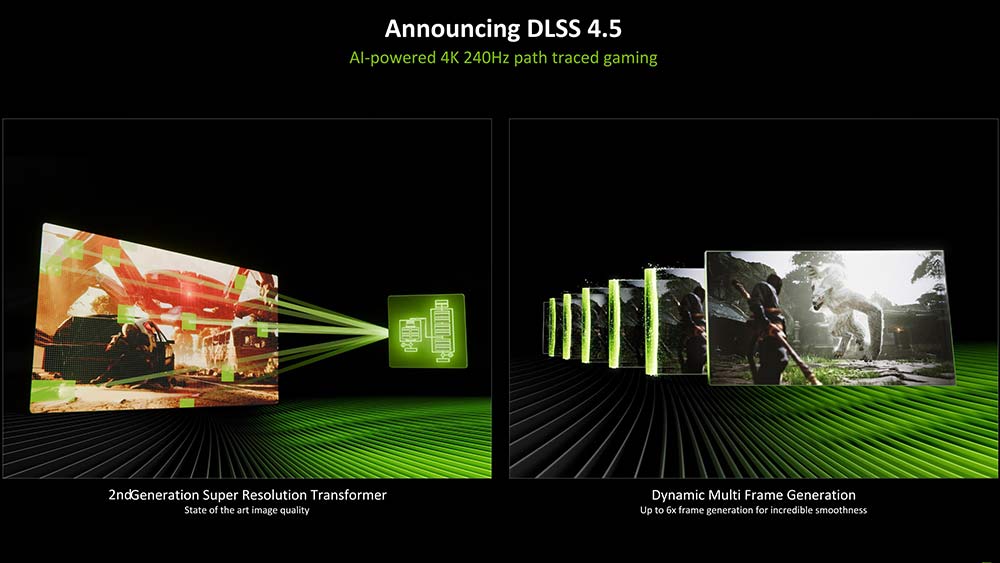
So, with DLSS 4.5 Nvidia is focusing on improving the visual quality by improving temporal quality, reducing ghosting and finally improving anti-aliasing. All of this is to say – games will look better. Now that the drivers have dropped (albeit again, without MFGX6 which is coming later), you can use Nvidia’s DLSS Override to push DLSS 4.5 on around 400 games currently supporting DLSS, which is absolutely fantastic.

To be clear, DLSS 4.5’s visual improvements will be available to all owners, so RTX 20/30/40 owners all benefit, along with RTX 50. RTX 40 cards will still be able to use 2x frame generation as it goes, but RTX 50 users currently can enable either 3x or 4x.
In the Spring, Nvidia will be updating to up to 6x DLSS frame generation, but are promising a few interesting things. Firstly, DLSS 4.5 FG will improve frame pacing and the visual quality of the generated frames will also see a higher standard of visual videlity.

Generally speaking, if you had a higher refresh rate monitor (let’s say 240hz) and with DLSS upscaling your FPS was say, 190FPS, generating more than an additional single frame wasn’t a good idea, because it was introducing addtional latency and you weren’t able to take advantage of the visual fidelity. But of course, sometimes the FPS might dip in super busy scenes.
Nvidia is changing how this works with DLSS 4.5’s 6x frame generation update, by allowing you to target an FPS to match your monitor and adjust the frame generation target dynamically. Nvidia call this Dynamic Mutlti Frame Generation.
In Nvidia’s example, they’re using the Nvidia App to target DLSS frame generation to 240FPS for BlackMyth Wukong. According to an early benchmark they’re providing in their press briefing documentation, the cost of 47ms of latency for 4x frame generation rises slightly to 53ms for 6x frame generation.
The improvements in frame pacing are a big deal, and the fact that it can dynamically adjust this now based on your targets and how ‘busy’ the GPU is will hopefully go a long way to improving performance.
When the MFG updates rolls out in Spring, I’ll be very interested to test out the improved frame pacing. It’ll also be very intriguing to see how the RTX 20/30 cards ‘deal’ with the visual improvements of DLSS. Currently, the Transformer model runs perfectly well on say, Turing, albeit the percent of performance hit is a little higher than it is with say, RTX 50 because the tensor cores aren’t quite as advanced.
Regardless, the visual quality updates are most welcome, and it’ll be fascinating to see what’s next for the DLSS 5.0 update, which I assume (not a leak) will debut with RTX 60 cards in the future.

Nvidia also proudly announced their G-Sync Pulsar monitor technology, with several monitors part of the presentation from the likes of ASUS, AOC and MSI. The G-Sync Pulsar screens are marketed towards esports, with higher performance 27 inch, 1440P panels running at 360Hz.

I haven’t personally been able to test these out yet (but I suspect it won’t be long until reviewers have feedback on these new screens, because they’re at CES and January 6th). According to Nvidia (and their partners), you get 1000Hz+ perceived motion clarity, and there are some photos to compare titles such as Counter-Strike 2 with Pulsar technology on vs off.

I’ll be honest, I don’t play the kind of games to really benefit from this tech anymore, but I suspect for those who’re sweating it in eSports circles, they’ll want to keep their eye on it.